
Autonomous Customer Operations · Insurance
Deflecting 68% of customer queries to AI self-service with Amazon Connect
An AI-native contact centre layer built on Amazon Connect — conversational self-service, real-time agent assist, and event-driven outbound — deployed entirely inside a regional insurer's AWS account.
68%
Inbound queries deflected to AI — no agent required
52%
Reduction in average handle time (18 → 8.6 min)
81%
Customer satisfaction — up from 58%
Real-time sentiment monitoring across 100% of live calls
Post-call summaries auto-generated for 120+ agents
MAS TRM & PDPA compliant — data residency ap-southeast-1
A regional insurance group operating across Singapore, Malaysia, and Australia handled over 1.2 million customer interactions a year through a traditional contact centre — policy enquiries, claims status checks, renewal reminders, and complaints, all handled by human agents working across disconnected systems. With rising call volumes, agent attrition above 35%, and CSAT stuck at 58%, the client needed to fundamentally reimagine how customer operations were delivered.
The goal: resolve the majority of queries autonomously, surface the right information to agents in real time during live calls, and eliminate the manual effort behind routine outreach — without sacrificing service quality or MAS TRM and PDPA compliance. The answer was an AI-native contact centre layer on Amazon Connect, powered by Amazon Bedrock Claude 4.5, running entirely within the client's AWS environment.
At this scale, traditional contact-centre operations surface compounding failures that no amount of additional headcount can sustainably solve:
- Agents spent 40% of every call searching across 4–5 disconnected systems — inflating average handle time to 18 minutes.
- 68% of inbound calls were routine enquiries that required no human judgment but consumed full agent capacity.
- DTMF-only IVR with no natural-language understanding drove a 38% abandonment rate before customers reached an agent.
- No real-time guidance during live calls — decisions relied on memory, static scripts, and supervisor interruptions.
- Outbound renewal and payment reminders were batch-processed weekly by hand, causing missed contacts and preventable lapses.
- Sentiment was never monitored mid-call — frustrated customers were only identified after a complaint had already escalated.
- Post-call notes took 8–12 minutes per agent, consuming 15% of productive capacity across the centre.
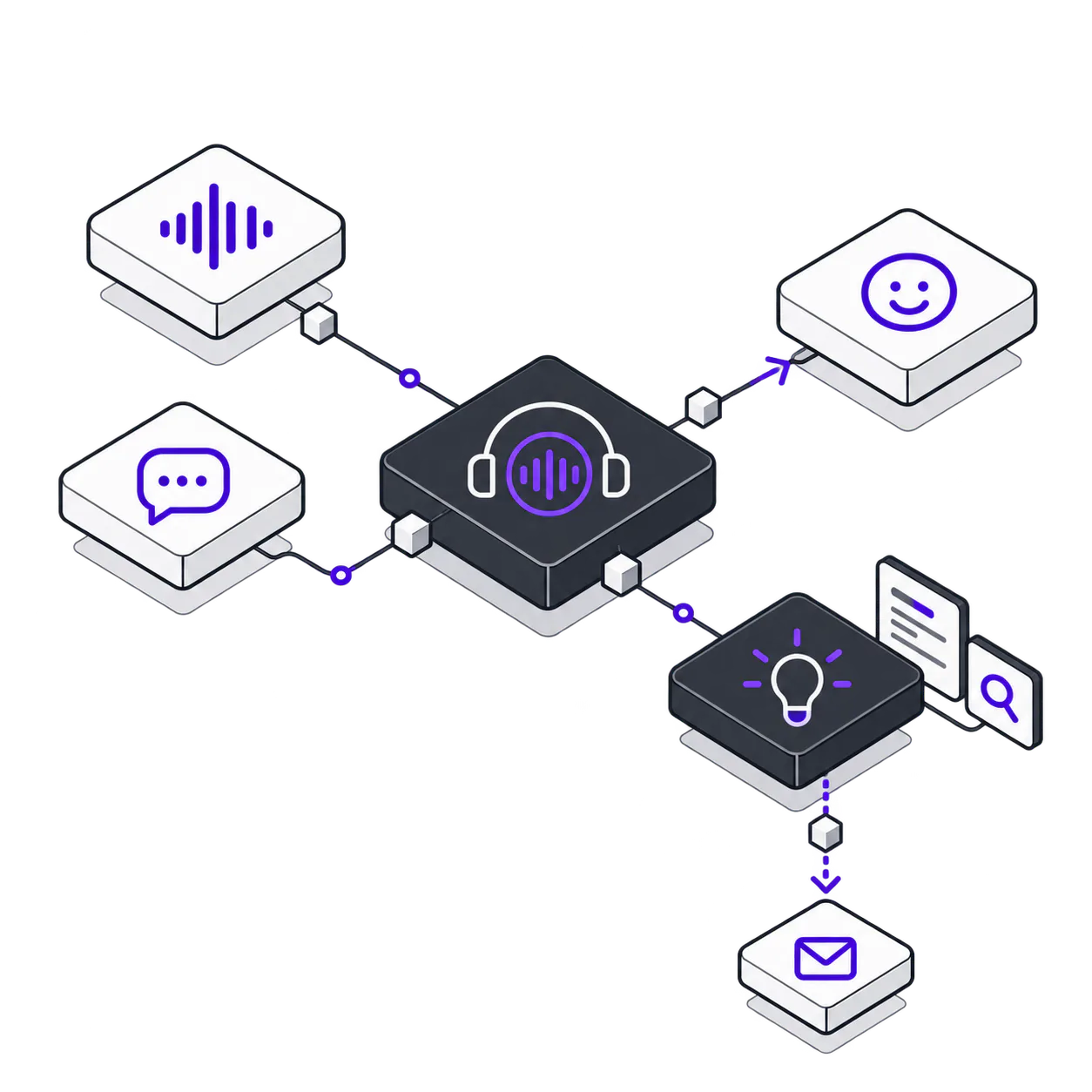
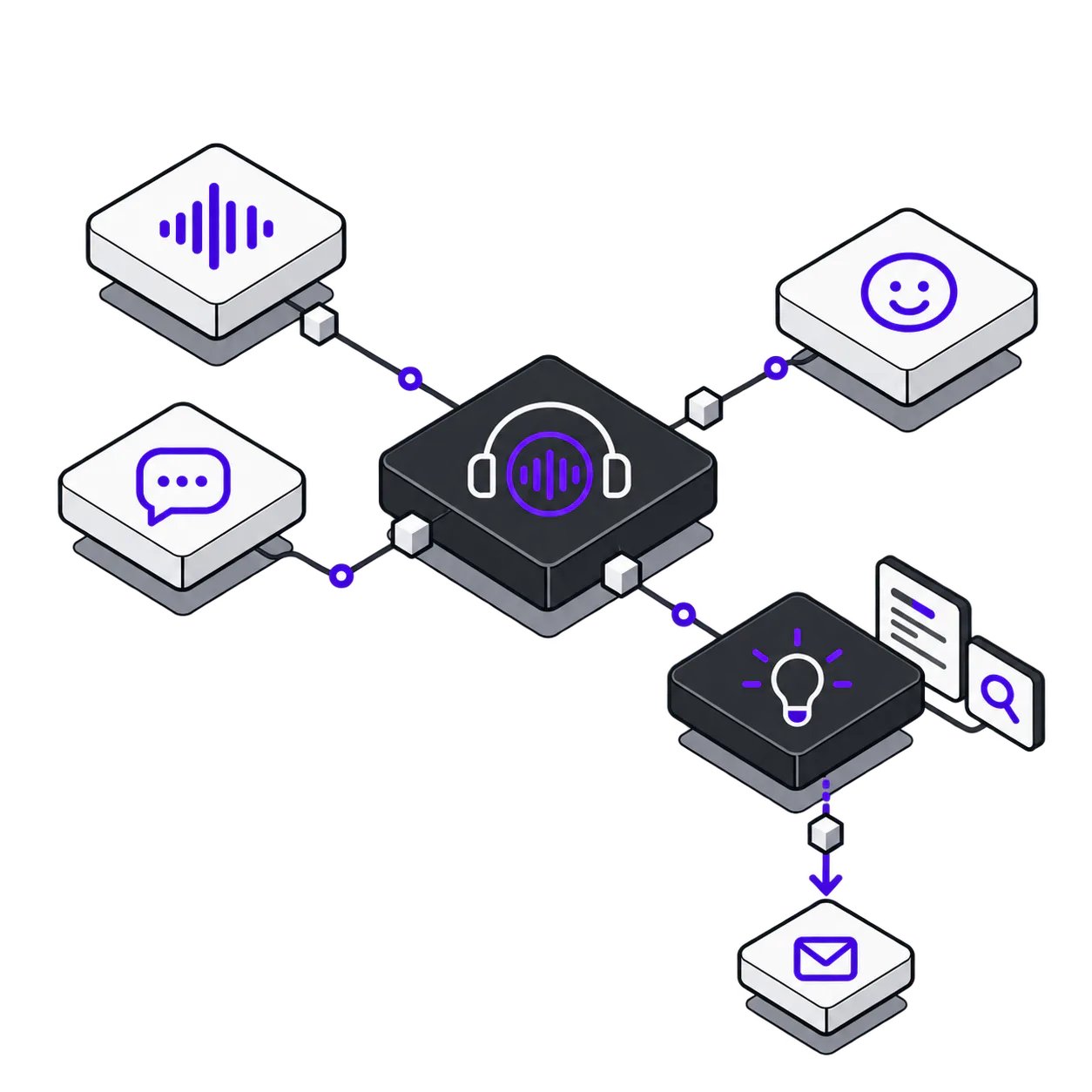
Algorims built its Autonomous Customer Operations Platform inside the client's AWS account — combining conversational AI self-service, real-time agent assistance, intelligent outbound, and live analytics into one platform across voice, web chat, WhatsApp, and mobile.
Conversational self-service layer
Amazon Lex powers a natural-language IVR across English, Mandarin, Bahasa Malaysia, and Tamil. Customers check policy status, get claims updates, make payments, and request callbacks — all without an agent. When a human is needed, the AI gathers full context before transfer so the agent begins already informed. Contact Lens streams live transcription with sentiment monitoring that alerts supervisors before frustration escalates.
Real-time agent assist desktop
A unified AI Agent Desktop inside the Amazon Connect CCP surfaces a complete customer view — policies, claims, billing, and prior interactions — within 800ms of connect via an intelligent screen pop. Bedrock Claude 4.5 generates contextual next-action prompts that update as the conversation moves, and a Kendra-backed knowledge search answers coverage questions in under 5 seconds. Post-call, Bedrock auto-generates a structured summary — removing manual note-taking from 120+ agents.
Event-driven outbound engine
An intelligent outbound engine uses Amazon Pinpoint and SES to orchestrate personalised renewal reminders, payment nudges, and claims notifications — triggered by real-time policy events via EventBridge, not weekly batches. Every state change automatically initiates the right touchpoint through the customer's preferred channel, while QuickSight dashboards give managers a live view of queue depth, sentiment, and deflection refreshed every 30 seconds.
Built entirely on AWS managed services, deployed within the client's account — no data leaves their environment:
Amazon Connect
Omnichannel contact centre — voice, chat, and outbound across three markets.
Amazon Lex
Conversational IVR with NLU across four languages.
Contact Lens
Real-time transcription, sentiment, and post-call analytics.
Amazon Bedrock (Claude 4.5)
Agent guidance, knowledge answers, and post-call summarisation.
Amazon Kendra
Policy and knowledge-base search returning answers in under 5 seconds.
AWS Step Functions
Outbound campaign and multi-step journey orchestration.
Amazon EventBridge
Event-driven outbound triggers from policy and claims state changes.
Amazon Pinpoint + SES
Personalised SMS, push, WhatsApp, and email delivery.
Amazon DynamoDB
Unified interaction history, session state, and configuration.
Amazon QuickSight
Real-time queue, sentiment, deflection, and SLA dashboards.
Amazon S3 + KMS
Encrypted call-recording storage with per-client CMK.
Cognito · WAF · VPC · CloudTrail
Authentication, network security, and audit logging.
Does the platform work across voice, chat, and digital channels?
Yes — voice (Amazon Connect), web chat, WhatsApp, mobile push, and email, all with a consistent AI backbone and unified interaction history.
How does the AI know what to say to agents during a live call?
Contact Lens streams a real-time transcript; Bedrock Claude 4.5 reads it alongside the customer's policy history and current context to generate next-action prompts that update as the call progresses — without the agent navigating away.
Does customer data leave the client's AWS account?
No. All AI inference, recording, transcription, and analytics run within the client's own AWS account and region. Data never transits Algorims infrastructure.
What does the outbound engine trigger on?
EventBridge listens to policy and claims events in real time — every state change automatically triggers the right outbound message through the customer's preferred channel within minutes, not days.
How long does implementation take?
Standard implementation runs 16–18 weeks: Connect + Lex build, AI pipeline and agent desktop, outbound engine and integrations, then UAT and go-live hardening.
Let's architect your Agentic Enterprise.
Talk to our team about your AI, cloud, or platform engineering goals. We'll design a plan that scales with your business.