
Case Study / Agentic AI · Enterprise Knowledge Management
An AI assistant for secure, cited answers from enterprise documents
In active deployment, this assistant uses Amazon S3 Vectors and Amazon Nova to answer questions from company documents, cite its sources, and respect each employee's access permissions.
- Industry
- Enterprise Knowledge Management
- Region
- Singapore (ap-southeast-1)
- Platform
- Amazon S3 Vectors + Amazon Nova
- Status
- In active deployment
Measured impact
From architecture to first working demo
Permissions-aware retrieval — authorised scope only
Every answer cited back to its source chunk
PDF, DOCX, PPTX, HTML & email ingestion
PII redaction via Bedrock Guardrails
Deployed in ap-southeast-1 for data residency
01 / Overview
The operating context.
Enterprises accumulate thousands of documents across SharePoint, S3, internal portals, and email. The knowledge is there — but finding it is a different problem entirely. Employees waste hours hunting for policy answers, contract clauses, and SOP steps, while keyword search returns lists of files, not answers.
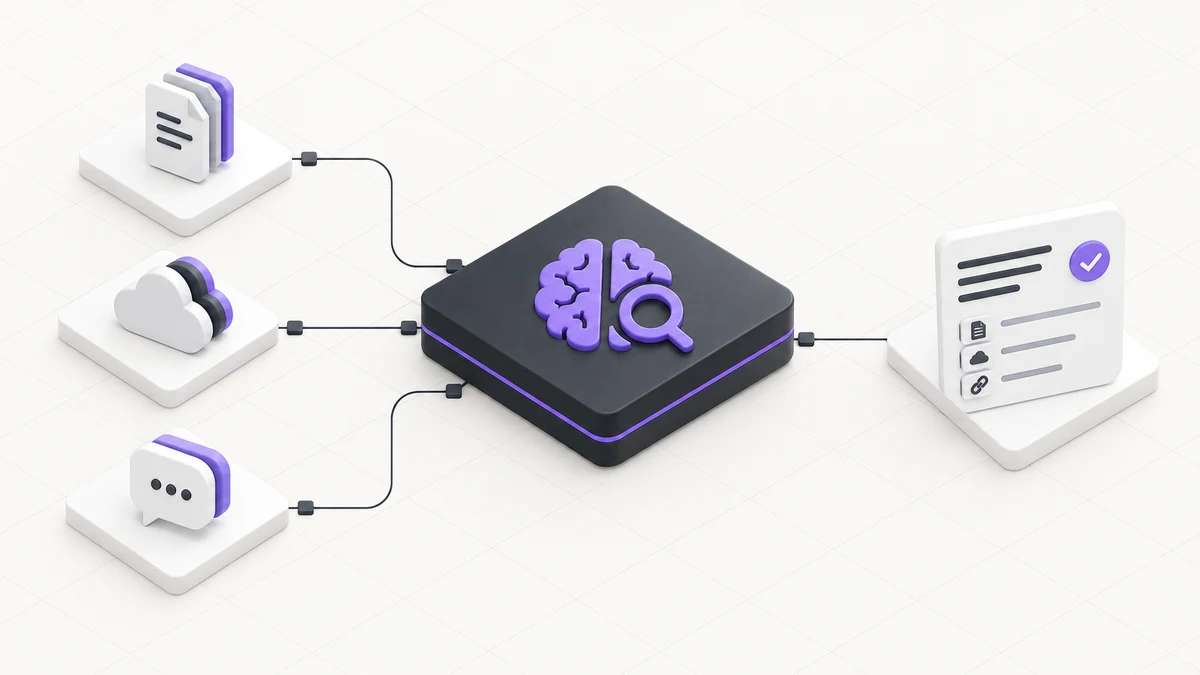
We are deploying a permissions-aware retrieval-augmented assistant built on Amazon S3 Vectors and Amazon Nova. Employees ask questions in plain English; the system retrieves the most relevant information, reasons through it, and delivers grounded, cited answers — instantly, securely, and without hallucination.
02 / Challenge
What stood in the way.
The problem is not a lack of knowledge — it is a lack of intelligent access to it:
- 01
Slow onboarding — new employees spend weeks finding information that should take minutes.
- 02
Compliance risk — outdated or incorrect documents get actioned because the right one was never found.
- 03
Repeated SME escalations — experts field the same questions daily instead of focusing on high-value work.
- 04
Decision delays — leaders wait for information that already exists somewhere in the organisation.
03 / Solution
What Algorims is building
A permissions-aware Enterprise Knowledge Mining Assistant — a production-grade RAG system engineered across six core capabilities that transforms how enterprises interact with their institutional knowledge.
Permissions-aware retrieval
Built on Amazon S3 Vectors — users only ever see documents within their authorised access scope. Enterprise security and compliance are enforced at the retrieval layer, not bolted on afterwards.
Citation-grounded answers
Every answer links directly back to its source document and specific chunk — eliminating hallucinated facts and giving employees the confidence to act on AI-generated answers.
Multi-format document ingestion
PDF, DOCX, PPTX, HTML, and email all ingested, indexed, and made searchable — across SharePoint, S3, Confluence, Salesforce, and internal portals.
Incremental document sync
The system tracks document changes and updates incrementally — no full re-indexing required, keeping the knowledge base current without operational overhead.
Intelligent fallback handling
When confidence falls below threshold, the system escalates rather than guessing. Enterprise AI that knows the boundaries of its own knowledge is safer than one that doesn't.
Continuous improvement loop
User feedback ratings feed directly into relevance tuning — the system gets measurably smarter with every interaction, compounding value over time.
System stack
Production foundations.
- Amazon S3 Vectors
- Amazon Nova
- Amazon Nova Lite
- Amazon Bedrock Guardrails
- AWS IAM
- SharePoint Connector
- Amazon S3
- Confluence
- Salesforce
04 / Results
What changed after delivery.
Instant knowledge access — precise, cited answers in seconds, not lists of files to search manually.
Zero security compromise — permissions-aware retrieval enforces every user's authorised scope natively.
Answers you can trust — every response cites its source, eliminating hallucinated facts.
SME escalations dramatically reduced — repeated questions answered autonomously.
Fast time to value — functional in under a week from architecture to first demo.
Singapore-ready — deployed in ap-southeast-1 for data residency compliance.